Author name: Subash Bishwokarma

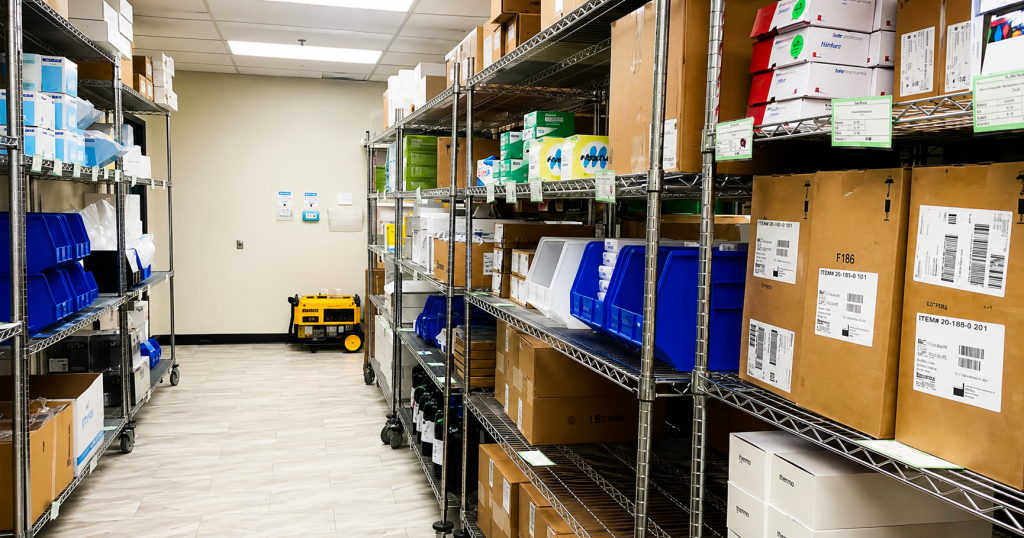
Lab with organized supplies in the storage area.
Inventory Management

Lab Inventory Management Software: Why Laboratories Need Better Inventory Control

For many laboratories, inventory management is one of those processes that works until it doesn’t. A reagent unexpectedly runs out. A box of supplies is discovered after it has already expired. Someone asks whether a replacement lot has been ordered, and nobody is quite sure. Staff start checking spreadsheets, emails, storage rooms, paper logs, or asking colleagues to piece together the answer. Individually, these may seem like small problems. But when they happen repeatedly, they consume staff time, increase costs, disrupt testing, and create unnecessary risk. These everyday challenges are exactly why lab inventory management software is becoming increasingly important for laboratories. The Problem With Manual Lab Inventory Tracking Consider some of the questions laboratory staff deal with regularly: What do we currently have in stock? What needs to be reordered? Which items are approaching expiration? Which lot should be used first? Is the new lot ready to be used? Are we purchasing more than we actually use? When this information lives in different spreadsheets, storage areas, emails, or paper records, getting a reliable answer can take time. More importantly, inaccurate lab inventory tracking can contribute to stock-outs, emergency orders, expired inventory, unnecessary purchasing, and testing disruptions. A laboratory inventory management system brings this information together so staff can see what is happening without searching through multiple sources Move From Reactive to Proactive Inventory Management One of the biggest advantages of lab inventory management software is helping laboratories identify problems before they affect operations. Instead of discovering an empty shelf when a reagent is needed, the laboratory can monitor inventory levels and identify low-stock supplies earlier. Expiration tracking provides similar protection. Knowing which reagents and consumables are approaching expiration gives staff time to use inventory appropriately, adjust purchasing, or take action before products become waste. Better visibility can help reduce last-minute ordering, overnight shipping costs, emergency borrowing, and avoidable testing delays. Reduce Reagent Waste and Control Inventory Costs Overstocking can be just as costly as running out. Without reliable usage information, laboratories may continue ordering the same quantities simply because that is how supplies have always been purchased. A good reagent inventory management system provides visibility into actual usage, purchasing patterns, expired inventory, and quantity on hand. Laboratories can use that data to make better decisions about reorder quantities, PAR levels, and purchasing frequency. The goal is simple: maintain enough inventory to support testing without tying up unnecessary budget in supplies that may eventually expire. Improve Lot Tracking and Laboratory Traceability Inventory management is not only about quantity. Laboratories also need to know which lots are available, when they were received, when they expire, and how they have been used. With digital reagent tracking and lot tracking, this information becomes part of the normal inventory workflow. If a recall, investigation, audit, or inspection occurs, staff can retrieve inventory history instead of reconstructing it from spreadsheets, binders, and emails. That creates better traceability while reducing the administrative burden on laboratory staff. Make Laboratory Inventory Easier to Manage The purpose of lab inventory management software is not simply to digitize a spreadsheet. It is to help laboratories gain control over the complete inventory lifecycle from receiving and reagent tracking to usage, expiration, ordering, and replenishment. When laboratory teams can quickly see what they have, what they need, what is expiring, and what they are actually using, inventory becomes more predictable and less reactive. For laboratories under constant pressure to improve efficiency, reduce waste, maintain traceability, and control costs, modernizing inventory management can make a measurable difference. And ultimately, laboratory staff should spend their time supporting testing and quality, not searching for supplies or updating spreadsheets.
Blog, Inventory Management

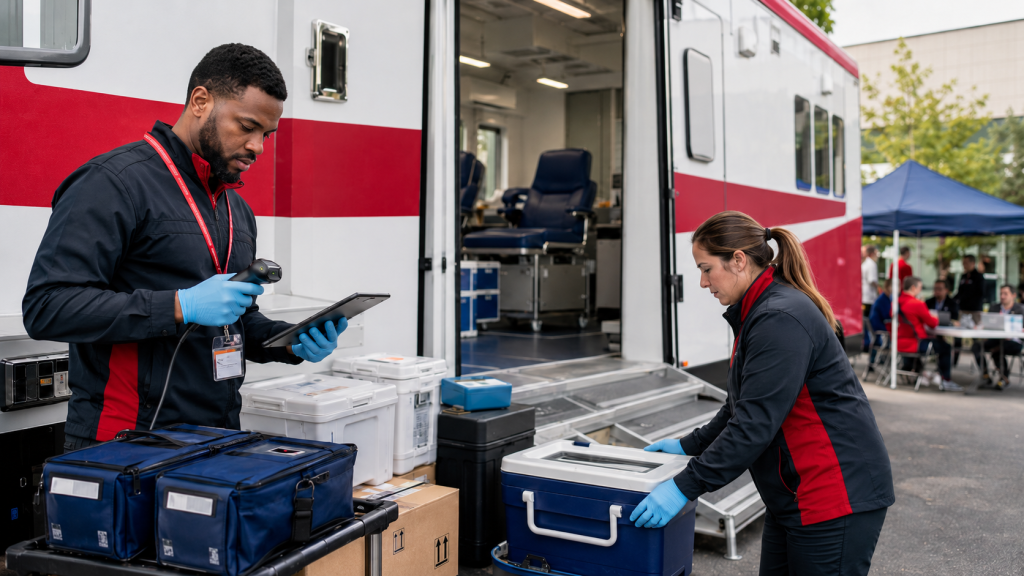
From Paper Checklists to Complete Traceability: Simplifying Inventory for Mobile Blood Drives

Mobile blood drives are essential for making blood donation more accessible to communities. However, behind every successful drive is a complex logistical process involving supplies, equipment, transportation units, staff, and inventory. For many blood centers, managing this process is still highly manual and inefficient. Before each drive, staff must determine which supplies and devices are needed, prepare handwritten packing lists, load transportation units, and document what is being sent. Once the drive is complete, the team must determine what was used, what remains, what was returned, and whether anything is missing or damaged. When this information is recorded on paper forms or disconnected spreadsheets, it can be difficult to answer even basic questions: Without a centralized system, blood centers may experience inventory discrepancies, limited visibility, unnecessary manual work, and difficulty tracing supplies and equipment throughout the mobile drive process. A Mobile Drive Workflow Built for Blood Centers Lab Symplified’s Mobile Drive functionality was designed specifically to help blood centers manage the complete movement of supplies and devices associated with mobile blood drives. Instead of relying on handwritten forms and manual reconciliation, blood centers can manage the workflow digitally—from initial planning through final return and closure. The process includes seven connected stages: Plan. Pack. Dispatch. Receive. Reconcile. Return. Close. Each stage creates a clear record of what happened, who completed the action, and where the supplies and equipment are within the process. Plan and Prepare the Drive The process begins when an administrator creates the mobile drive. During this stage, the administrator can organize the drive, select the required supplies and devices, and manage the transportation units that will carry them. The drive remains in a draft status while the team prepares and adjusts the required inventory. This provides a centralized packing plan instead of requiring staff to create a new handwritten list for every event. Administrators can review what is being prepared and make changes before the drive is finalized. Pack Supplies and Devices with Greater Control Once the requirements have been confirmed, the administrator packs the supplies, equipment, and devices needed for the drive. The system records what is being sent, creating a digital reference that can later be compared against what the field team receives and returns. After packing is complete, the drive moves to a packed status, indicating that the supplies and devices are ready to be dispatched and received by the field team. This creates a clear handoff between the staff preparing the drive and the staff conducting it. Confirm What Arrived at the Mobile Drive When the field team receives the shipment, they can confirm what was delivered. This is an important control point. Instead of assuming that everything packed at the blood center arrived at the mobile location, field staff can verify the actual supplies and devices received. Any discrepancies, missing items, or other issues can be documented at the time of receipt. This helps identify problems earlier rather than discovering them after the drive has ended. Once receipt is confirmed, the drive status is updated to received. Reconcile Inventory at the End of the Drive At the end of the mobile drive, field staff can document what happened to the inventory. They can record what was used, what remains, what should be returned, and whether there were any issues that require follow-up. This digital reconciliation gives the blood center a much clearer comparison between: Once this process is completed, the drive moves to a reconciled status. Administrators can then review the reconciliation and complete the appropriate return actions. Return Equipment and Close the Drive After the supplies and devices return to the blood center, the administrator can confirm the returned items, address discrepancies, and complete the drive. Closing the drive is more than an administrative step. It ensures that returned devices are properly reflected as available and that the inventory record remains accurate. Until the drive is closed, it remains visible as an active drive. Once all return actions are completed, the administrator closes the drive, and it moves into the historical record. This provides a complete history that can be reviewed later without leaving old or completed drives mixed with current activities. Clear Responsibilities for Administrators and Field Teams The Mobile Drive workflow separates responsibilities based on each user’s role. Mobile drive administrators are responsible for setting up the drive, managing transportation units and devices, packing supplies, processing returns, resolving discrepancies, and closing the drive. Field staff and team leads are responsible for confirming what they received, documenting what was used or left over, identifying what should be returned, and recording relevant notes or issues. This role-based approach helps create accountability without requiring every user to manage the entire process. Better Visibility from Departure to Return The status of each drive provides an immediate picture of where it is in the workflow: These statuses allow administrators to quickly identify which drives are still being prepared, which are currently active, which require reconciliation, and which are ready to be closed. Creating a Complete Audit Trail Every mobile drive involves multiple handoffs between people, locations, and transportation units. When those handoffs are documented manually, records can be incomplete, difficult to locate, or open to interpretation. A digital workflow creates a traceable history of the drive, including what was packed, what was received, what was used, what was returned, and which users completed each step. This can help blood centers strengthen operational oversight, investigate discrepancies, maintain more accurate device availability, and prepare documentation more efficiently when records are needed. Moving Beyond Handwritten Mobile Drive Forms Mobile blood drives will always require careful preparation and coordination. However, managing them should not depend on handwritten lists, manual comparisons, and disconnected records. Lab Symplified’s Mobile Drive functionality brings the entire process into one controlled workflow designed around how blood centers operate. By connecting planning, packing, field receipt, reconciliation, returns, and drive closure, blood centers gain clearer visibility into their supplies and devices throughout the entire journey. The result is a more organized, traceable, and accountable mobile drive

Blog, Electronic Log, Lab Inspections

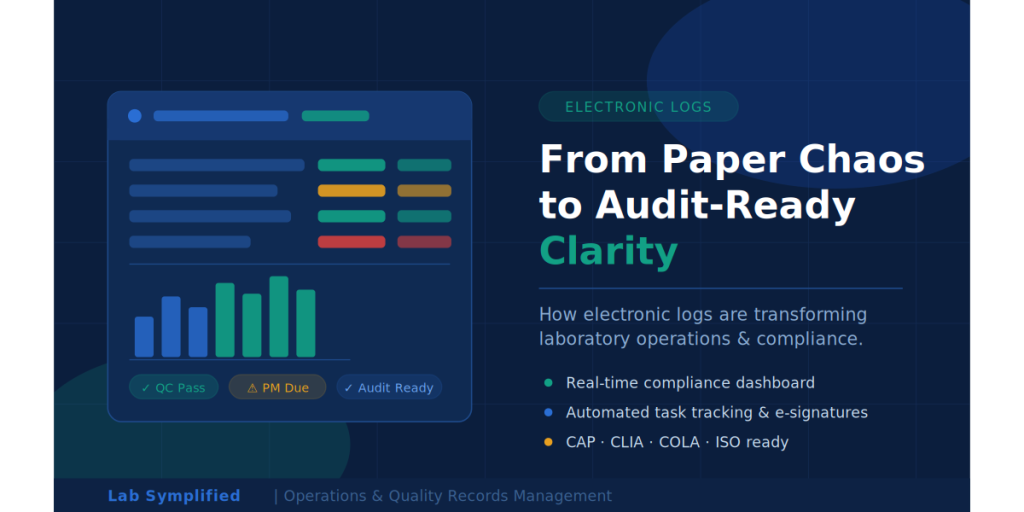
From Paper Chaos to Audit-Ready Clarity: How Electronic Logs Are Transforming Laboratory Operations

Running a laboratory is one of the most operationally complex jobs in healthcare. On any given day, your team is simultaneously managing instrument maintenance, quality control checks, temperature monitoring, reagent validations, staff documentation, proficiency testing, corrective actions, and shift handoffs — and that’s before a single patient result goes out the door. Now ask yourself: where does all of that get recorded? If the honest answer involves a binder on the bench, a shared spreadsheet someone updates (when they remember), or notes passed between shifts, you’re not alone. But you are carrying a risk you don’t have to. The Hidden Cost of Scattered Lab Documentation Labs don’t fail audits because they’re doing bad science. They fail audits and experience near-misses because documentation systems can’t keep up with operational reality. When logs live across paper notebooks, disconnected spreadsheets, and informal workarounds, a predictable set of problems follows: The problem isn’t your team’s diligence. It’s that traditional documentation tools were never designed to handle the volume, complexity, and compliance demands of a modern laboratory. What “Audit-Ready” Actually Looks Like Most labs think of audit readiness as something you sprint toward in the weeks before an inspection. The reality is that true compliance readiness is a daily operational state — and it’s only achievable when your documentation system is built to support it, not fight against it. An audit-ready lab is one where: That’s the operational standard Lab Symplified’s electronic log system is designed to make achievable — not just at inspection time, but every single day. A Centralized Platform for Every Moving Part Lab Symplified replaces fragmented documentation with a single, structured electronic records environment built specifically for how laboratories operate. Here’s what that looks like in practice: One Dashboard. Total Operational Visibility. Instead of reacting to problems after they occur, laboratory leaders can identify risks before they become audit findings. Standardized Workflows Daily QC, weekly maintenance, monthly calibrations, safety checks, and operational tasks can all follow standardized workflows. Built-in schedules, reminders, timestamps, and electronic signatures help ensure consistency regardless of shift, department, or location. Complete Instrument Lifecycle Tracking  Every instrument has a story. Electronic logs make it possible to maintain complete records for: When inspectors ask for documentation, records can be retrieved in seconds instead of hours. Stronger CAPA and Risk Management  Corrective actions are only effective when they are documented, assigned, tracked, and verified. With configurable CAPA workflows, laboratories can: The result is a stronger quality management system and reduced operational risk. Audit Readiness Every Day One of the greatest benefits of electronic logs is that audit preparation becomes part of everyday operations. Instead of scrambling before an inspection, laboratories maintain: Every task, check, review, and approval becomes part of a permanent, inspection-ready record. Digital Shift Reports That Preserve Continuity Shift handoffs are one of the highest-risk moments in lab operations. Lab Symplified’s digital shift report captures summaries, outstanding issues, instrument updates, quality events, and staffing context in a structured format,  so every piece of critical information carries forward, and nothing gets lost between teams. Proficiency Testing Management  Track PT events from the moment samples arrive through submission and result review. Assign tests with automatic staff notifications, log deadlines and instructions, upload supporting documents, and maintain a complete PT history with full audit trail. No missed deadlines, no ownership confusion. Alerts and Notifications That Keep Issues From Becoming Findings Configurable alerts flag missed tasks, overdue activities, equipment failures, and service events before they escalate. Teams get the visibility they need across shifts without requiring constant manual oversight. Reporting and Operational Insights  Without Manual Effort Real-time compliance status reports, equipment maintenance histories, task completion rates, and trend analysis are all available without anyone compiling a spreadsheet. Leadership gets the operational visibility to spot gaps and optimize workflows. Compliance teams get the documentation they need without the scramble. Who This Is Built For Lab Symplified’s Operations & Quality Records Management is designed for: Any lab replacing paper logs and spreadsheets with a system built for modern compliance expectations The Bottom Line Your laboratory produces some of the most consequential data in medicine. The operational systems supporting that work should be held to the same standard. Lab Symplified transforms daily lab work into permanent, audit-ready records, not as an extra administrative burden, but as a natural byproduct of how your team already operates. Less time managing documentation. More time running a laboratory that’s always ready for whatever comes next. Ready to move from reactive documentation to controlled execution? Explore what Lab Symplified’s electronic log platform can do for your lab.

Inventory Management

Why Inventory Management Is More Critical for Rural and Critical Access Hospital Labs

Critical access hospitals (CAHs) and rural laboratories operate under some of the most challenging conditions in healthcare. With limited staff, constrained budgets, and long distances to reference labs or supplier networks, even small inventory disruptions can significantly impact patient care. In these environments, effective inventory management isn’t just an operational improvement — it’s essential for maintaining clinical continuity. A digital inventory management system like Lab Symplified can play a vital role in helping rural hospitals stay prepared, reduce waste, and deliver timely patient results. The Unique Inventory Challenges in Critical Access Hospitals Unlike large urban hospitals, critical access hospitals typically maintain limited stock levels due to budget constraints and storage capacity. However, they also need to hold safety stock because borrowing supplies from nearby facilities is often not an option. Many rural labs are geographically isolated, meaning emergency replenishment can take hours or even days. This creates a difficult balance: In many cases, these labs rely on spreadsheets, whiteboards, or memory to track inventory. When staff are rotating, on-call, or covering multiple departments, inventory visibility becomes even more difficult. A single expired reagent or unexpected stockout can halt testing entirely, forcing samples to be sent out to distant reference labs, delaying diagnosis and treatment. The Patient Care Impact of Poor Inventory Visibility In rural healthcare settings, time matters even more. If a troponin reagent runs out, cardiac patients may need to wait hours for results from a reference lab. If blood bank supplies expire unnoticed, transfusion delays can occur. If chemistry controls are unavailable, testing may stop entirely. These disruptions lead to: Digital inventory management platform like Lab Symplified directly addresses these risks by providing real-time visibility into stock levels, expiration dates, and reorder needs. How Digital Inventory Management System Helps Rural Labs A digital system like Lab Symplified simplifies inventory oversight and reduces reliance on manual tracking. Key benefits include: Proactive Low-Stock AlertsLabs receive notifications before supplies run out, preventing last-minute emergencies. Expiration TrackingAutomated alerts help staff use reagents before they expire, reducing costly waste. Centralized VisibilityAll staff can see inventory levels instantly, eliminating guesswork during off-hours. Usage-Based ReorderingHistorical usage data helps labs maintain optimal stock without over-ordering. Reduced Staff BurdenAn organized and dedicated system saves valuable technologist time, allowing focus on patient testing. Financial Benefits for Budget-Constrained Hospitals Critical access hospitals operate on tight margins, with limited reimbursement and shrinking federal funding. Every wasted reagent and unnecessary overnight shipment impacts the bottom line. Digital inventory management helps reduce: Over time, these savings can be significant especially for smaller labs. Supporting Reliable Testing in Rural Communities Rural hospitals serve communities that often have limited healthcare alternatives. When testing is delayed, patients may need to travel long distances or face delayed treatment decisions. Ensuring consistent testing availability is essential. By implementing a digital inventory management system, critical access hospitals can: For rural laboratories, inventory management is not just about supplies; it’s about ensuring care is available when patients need it most. A modern digital solution like Lab Symplified helps critical access hospitals stay prepared, efficient, and focused on delivering timely, high-quality care.

Stack of paper lab logs and binders beside a tablet displaying an electronic laboratory log management system in a clinical lab.
Blog, Electronic Log

Why Paper Logs And Spreadsheets Are Slowing Down Your Laboratory Operations

In many clinical laboratories, paper logs, binders, and scattered spreadsheets are still the backbone of daily operations. From maintenance logs and temperature monitoring to QC documentation and shift reports, labs rely on manual systems that feel “normal” because they’ve always been there. But what feels routine is often the hidden source of inefficiency, compliance risk, and operational stress. Let’s look at what’s really happening inside labs every day. When a Task Is Missed: The Domino Effect When a required task isn’t completed, the real work begins. First, someone has to discover it, often days late,r during a weekly or monthly review. Then comes the investigation: Supervisors start chasing technologists across shifts. Emails are sent. Conversations happen. If the task was critical, preventive maintenance, temperature monitoring, or QC verification, now a variance report must be initiated. What started as a missed check turns into: And in some cases, real risk to patient safety and quality operations. Manual systems don’t prevent missed tasks. They only help you discover them later. The Accountability Problem In laboratories, accountability becomes blurry. Paper logs and spreadsheets: Supervisors spend hours reviewing binders, signing off logs, and manually ensuring nothing was missed. In already short-staffed labs, this repetitive manual oversight consumes valuable time that could be spent on Quality improvement initiatives, Staff training, Operational optimization, and Process improvement. Instead, leadership time is spent chasing documentation. Electronic logs create time-stamped, attributable entries with audit trails and electronic sign-offs, eliminating the need to manually track down responsibility. Accountability becomes built into the workflow, not dependent on memory or follow-ups. Managing Scattered Logs Across Departments Most labs don’t have one log. They have dozens. And they’re often scattered: Managing and monitoring these records becomes a full-time effort. Lab Symplified Electronic Log centralizes equipment records, task management, operational records, quality records, digital shift reporting, and compliance documentation into one unified platform. Instead of flipping through binders, supervisors can: What once required hours can now take minutes. From Reactive to Controlled Execution The biggest difference between paper logs and electronic logs isn’t just digital storage. It’s control.Electronic logs: Instead of hoping nothing was missed, labs gain real-time oversight. Instead of chasing accountability, it’s built in. Instead of discovering compliance gaps weeks later, they’re prevented in real time. The Bottom Line Paper logs may feel simple. But beneath that simplicity lies hidden inefficiency, risk, and wasted time. Electronic log management isn’t just about going digital. It’s about building a laboratory system where accountability is clear, tasks are never missed, and audits are no longer stressful events. For labs ready to replace binders and spreadsheets with structured, audit-ready records, the future isn’t complicated. It’s simply organized.

Inventory Management

Laboratory Inventory Management Software: Take Control Without the Chaos

In today’s clinical and diagnostic laboratories, poor inventory management doesn’t just create inconvenience. It creates operational risk, financial waste, and compliance exposure.When labs rely on spreadsheets, paper logs, or disconnected systems, the results are predictable: stockouts that disrupt patient testing, expired reagents that increase waste, emergency orders that inflate costs, and last-minute scrambling during audits. Inventory becomes reactive instead of controlled. Modern laboratories need a laboratory inventory management system built specifically for how labs operate. Why Inventory Is a Critical Risk Area in Laboratories Manual inventory tracking creates operational blind spots: For laboratories, these inefficiencies scale quickly. Without centralized control, inventory costs rise while compliance confidence drops. A Lab-First Inventory Management Platform Lab Symplified delivers an end-to-end laboratory inventory management software solution designed exclusively for clinical laboratories.Unlike generic inventory tools, this platform tracks supplies from purchase to consumption, embedding lot traceability, expiration control, and audit documentation directly into daily workflows. 1. Reagent & Consumable Inventory Control Outcome: Never run out. Never overstock. Never guess. 2. Purchasing & Replenishment Workflows This ensures aligned ordering across departments while preventing duplicate purchases. 3. Multi-Location Inventory Transfers For health systems and reference labs managing multiple sites: No more fragmented tracking between locations. 4. Lot Qualification & Readiness Control Strong lot control is essential for patient safety. The system allows labs to: Only qualified lots reach patient testing. 5. Barcode-Driven Inventory Workflows Manual entry creates errors. Barcode-enabled workflows allow: Result: Faster workflows, improved inventory accuracy, and reduced human error. Audit-Ready Inventory Compliance Complete audit trails document receiving, usage, adjustments, and transfers. Lot-level and expiration-based traceability ensure labs remain inspection-ready without last-minute reconciliation. For labs preparing for CAP inspections, CLIA compliance reviews, or internal financial audits, this level of documentation is critical. Business Impact: What Labs Gain Laboratories implementing structured inventory management experience: Inventory shifts from reactive chaos to controlled, data-driven decision-making. Take control of lab inventory without the chaos. Replace spreadsheets and reactive ordering with a laboratory inventory management system built for real-world lab operations

Blog, Inventory Management

Manual vs. Digital Lab Inventory Management: What’s the Real Cost?

Manual lab inventory management might seem “free,” but that couldn’t be further from the truth. The time, waste, and risk involved in using spreadsheets, whiteboards, sticky notes, or Kanban boards come at a significant hidden cost. In this post, we break down the true costs of manual inventory systems vs. the savings and efficiency you can expect with a digital solution like Lab Symplified Lite. The Hidden Costs of Manual Inventory Let’s look at what manual lab inventory management is really costing your lab: 1. Wasted Staff Time Updating spreadsheets, sending emails, printing logs, and double-checking supply closets takes hours each week hours your staff could spend on testing or patient care. 2. Expired Reagents and Supplies Without expiration tracking, inventory often goes unused until it’s too late. Tossing just $2000/month in your entire lab expired supplies = $24,000/year in avoidable waste. 3. Duplicate Orders When teams operate in silos, ordering errors are bound to happen. A couple of duplicated orders a month can quietly inflate your budget. 4. Failed Audits or Inspection Prep Compliance penalties, audit stress, and reputational risk add up. Delayed validation, QC or missing  lot traceability record could lead to major consequences. The Benefits of Going Digital with Lab Symplified Lite Lab Symplified Lite is designed to give small-to-medium labs everything they need to take control of their inventory without the complex and costly solution. Enhanced Visibility Know exactly what’s in stock, where it is, and when it expires.  Automated Alerts Get notified when stock is low or items are nearing expiration, so you’re always ahead.  Proactive Compliance Maintain logs, assign tasks, track proficiency tests, and generate digital audit trails with ease.  Cost Savings By reducing waste and over-ordering, most labs see ROI within the first few months. Manual lab inventory management isn’t just inefficient—it’s expensive. Switching to a digital solution like Lab Symplified Lite saves you time, money, and compliance headaches. Ready to upgrade from spreadsheets? Sign up today and try Lab Symplified Lite free for 2 weeks  Start Your Free Trial

Inventory Management System For Labs
Inventory Management

Top 5 Signs Your Lab Has Outgrown Spreadsheets For Inventory Management

Spreadsheets are often the starting point for managing lab inventory. They’re free, familiar, and flexible until they start breaking down. If your lab is dealing with inventory surprises, delayed reorders, or failed audits, your spreadsheet may be doing more harm than good. Here are 5 clear signs it’s time to move beyond spreadsheets and upgrade to a smarter inventory management system built for labs. 1. You’re  Repeatedly Running Out of Stock  If your team is frequently scrambling for supplies, it’s a red flag. Spreadsheets can’t warn you in real-time when supplies are running low. Without automated alerts, you’re always reacting instead of planning. With Lab Symplified Lite Inventory Management System, you get proactive stock level alerts and par-level tracking to prevent stockouts before they happen. 2. Duplicate Orders Are Becoming Common Multiple team members managing a shared spreadsheet or submitting orders via email is a recipe for miscommunication. One click too many can lead to expensive duplicate purchases or unnecessary waste. Lab Symplified Lite Inventory Management System centralizes requests, tracks order status, and eliminates duplication saving both time and money. 3. You’re Throwing Away Expired Supplies Expired inventory isn’t just wasteful, it’s a compliance risk. Spreadsheets don’t send expiration warnings or maintain traceable lot histories. The result? Costly throwaways or, worse, usage of expired items. With Lab Symplified  Lite, you’ll get automated expiration tracking and real-time alerts, helping your lab stay compliant and efficient. 4. Quality Tasks Are Disorganized and Hard to Track Maintaining a reliable Quality Management System (QMS) requires clear records of lot numbers, expiration dates, validations doc, QC, and lot-to-lot testing. But in many labs, those records are buried in binders, paper logs, or scattered across files and folders. Worse yet, they often have no easy way to tell which lot is currently in use, which shipment is new, or whether the required QC was ever performed. This leads to confusion, missed validations, delayed QC, and disrupted workflows. Lab Symplified Lite brings order to the chaos. It allows you to: This not only improves day-to-day efficiency, but also makes your lab inspection-ready, supporting compliance with CAP, CLIA, or ISO standards. It’s a huge upgrade for labs trying to move from reactive to proactive quality management. 5. Inventory Audits Are Inconsistent and Untraceable Inventory audits are crucial to keeping supplies in check but most labs today still handle them manually. Tasks are often assigned to a small group, with no structured system to track when audits were last done, who completed them, or what was missed. Paper logs get lost. Excel files don’t trigger reminders. And without clear accountability, audits are delayed, rushed, or skipped leading to unexpected stockouts and compliance issues. Lab Symplified Lite changes that. With its built-in Inventory Auditing feature: This transforms inventory auditing from a chaotic chore to a streamlined, systematic process ensuring traceability, accountability, and timely completion. Spreadsheets served their purpose but when they start holding your lab back, it’s time for something better. Lab Symplified Lite is built specifically for labs like yours: Are you ready to ditch the spreadsheet chaos? Sign up today and get a month of Lab Symplified Lite for free; no commitment. Start Your Free Trial

Laboratory General

Reimagining Lab Work: The Case for Hybrid and Remote Roles

By: Amari Henderson, MBA, MLS The Debate on Remote and Hybrid Lab Roles The question of whether medical laboratory scientist roles can evolve into remote or hybrid positions has sparked intense discussions. A recent poll revealed that 39% of respondents believe remote work is possible, while another 39% think it’s worth exploring. However, 12% preferred hybrid roles, and 9% were adamant that lab work needs to remain on-site. The comments from professionals highlight both practical challenges and potential opportunities in transitioning lab jobs to a hybrid model. The Case for Hybrid and Remote Lab Roles Certain aspects of laboratory work undeniably require a physical presence—handling specimens, maintaining instruments, and troubleshooting unexpected results. However, many professionals argue that ancillary lab roles are already remote or have the potential to be. Some key areas include: Point-of-Care (POC) Testing and Hybrid Possibilities Point-of-Care (POC) testing is one area where hybrid roles are already being implemented. POC coordinators and specialists often travel between facilities to ensure compliance, train staff, and troubleshoot issues, but much of their work—such as data review, policy writing, and quality assurance—can be done remotely. As POC technology advances, there is increasing potential for hybrid roles where professionals oversee multiple locations from a centralized remote setting. Addressing the Root Cause: Why the Desire for Remote Work? The push for remote work in laboratory professions may not be solely about convenience but could reflect deeper workplace challenges. Some key reasons include: Far Far Away Let’s be honest—most of us got into the lab field because we wanted to help patients… from a distance. We actively chose the least patient-facing role in healthcare, and now, here we are, trying to figure out how to get even further away. One commenter in the poll put it bluntly: “Why go into a ‘hands-on’ profession if you don’t want to be there? Instruments need maintenance. Specimens and questionable results require us to look at them. Tip them back and forth. Check them for clots. One can’t do that working remotely.” Fair point! On the other hand, another professional noted that hybrid work is already a reality: “There will always be a need for on-site staff to physically do testing, and on-site support to oversee that. But there are tons of ancillary supporting roles that can be done remotely and currently exist out there for those with the patience to find them.” So, maybe we aren’t totally crazy for wanting to swap out our lab coats for pajamas, at least part of the time. Could Alternative Work Schedules Be a Solution? Instead of transitioning fully to remote work, exploring alternative workweek structures might address some of the same concerns. Options such as: These adjustments could improve work-life balance without completely shifting the industry away from its hands-on nature. The Future of Hybrid Lab Roles While not every lab job can become remote, it’s clear that hybrid models are feasible and already in place in some areas. As technology evolves and workforce expectations shift, laboratory professionals and healthcare organizations should continue exploring flexible work arrangements that balance efficiency, employee satisfaction, and patient care needs. By addressing the root causes behind the desire for remote work, the industry may find innovative solutions that benefit everyone. Tell us what you think in the comment section.

Inventory Management

How to Master Lab Inventory Management: 5 Game-Changing Strategies

Laboratory inventory management can feel like an endless battle, constant reordering, missing supplies, and wasted reagents all lead to operational inefficiencies and unnecessary expenses. If your lab struggles with tracking supplies, maintaining organization, and preventing stockouts, you’re not alone. The good news? With the right strategies, you can transform your inventory process from chaotic to streamlined. In this guide, we’ll cover the five essential steps to conquering lab inventory, saving time, reducing waste, and ensuring compliance. Plus, we’ll explore how an inventory management system like Lab Symplified can take your inventory management to the next level. The Hidden Costs of Poor Lab Inventory Management Many labs still rely on outdated tracking methods, spreadsheets, paper logs, or verbal communication. These inefficiencies can lead to: If any of this sounds familiar, don’t worry, you can fix these issues with a structured approach. Let’s dive into the five key steps to optimize lab inventory management. Optimize Your Storage Space Problem: Many labs operate in cramped spaces, leading to cluttered storage and frequent ordering in small quantities. Solution: Step 2: Implement Smart Organization Strategies Problem: Disorganized storage leads to misplaced items, wasted time, and excess orderings. Solution: Step 3: Reduce Human Error with Simple Systems Problem: Manual tracking leads to forgotten log entries, miscounts, and lost supplies. Solution: Step 4: Gain Data Insights for Smarter Ordering Problem: Without real-time usage data, ordering decisions are based on guesswork Solution: Step 5: Standardize and Centralize Inventory Processes Problem: Inconsistent tracking across departments leads to confusion and miscommunication Solution: Why Manual Methods Aren’t Sustainable (and What to Do Instead) While spreadsheets and paper logs might work in the short term, they require constant effort and are prone to human error. Labs that switch to inventory management software see: ✅ 80-90% reduction in expired reagents ✅ Faster stock reconciliation (saving hours of manual work) ✅ Improved compliance and audit readiness. That’s where Lab Symplified comes in. Lab Symplified: The Smarter Way to Manage Lab Inventory Lab Symplified is an inventory management system designed specifically for laboratories. It helps you: ✅ Track inventory in real time with automated stock updates.✅ Receive low-stock alerts before running out of critical supplies.✅ Analyze usage trends to optimize ordering and reduce waste.✅ Keeps track of lot no. and expiration date.

Scroll to Top