Generational Differences

Blog, Laboratory General

Always Audit-Ready: Why Digital Maintenance Logs Are a Must for Modern Labs

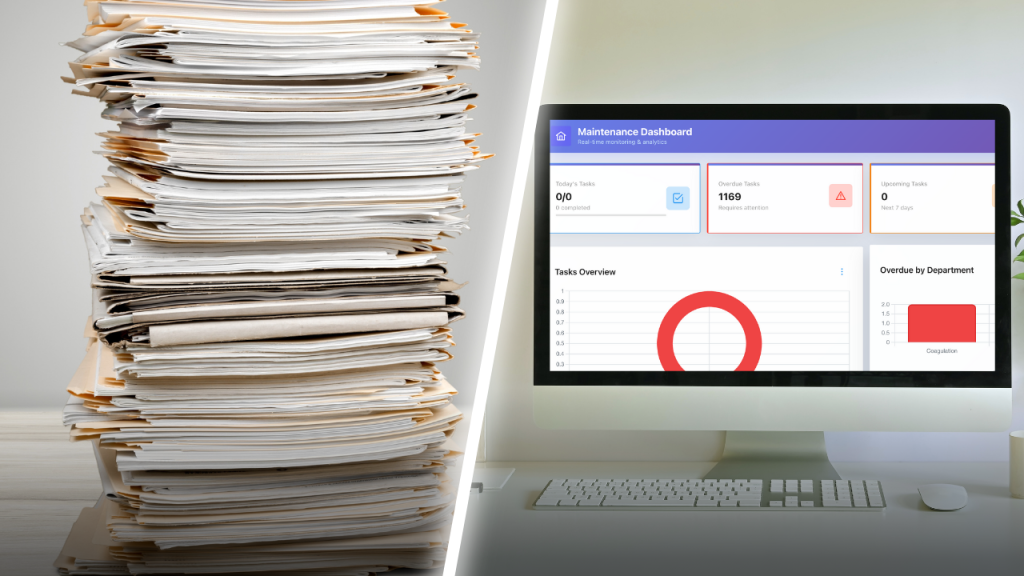
Understanding the Context Behind the Divide In many clinical and research laboratories, essential routines such as maintenance logs, equipment calibration records, temperature logs, daily operational checklists, quality control, and training sign-offs still live in paper binders or scattered spreadsheets. It may feel manageable, but the hidden cost of these “home-grown” systems grows daily. Whether you’re a bench technologist, supervisor, manager, or lab director, you’ve likely faced the same challenges — forgotten tasks, incomplete documentation, illegible records, and the scramble to find reports before an audit. The Real Cost of Staying Manual When laboratories rely on paper or Excel instead of a dedicated digital maintenance log platform, inefficiencies multiply. 1. Missed or delayed tasks Technologists juggle multiple responsibilities. When reminders rely on memory, things get missed. Managers often discover overdue work too late, forcing last-minute fixes and compliance stress. 2. No data validation or accuracy Paper systems can’t confirm if data was entered correctly or on time. Errors often surface during review, leading to corrective actions, deviation reports, and wasted staff hours correcting preventable mistakes. 3. Disorganization and wasted time (1981–1996)Logs stored in different folders or binders make it impossible to see the full picture. Supervisors spend hours flipping through pages or spreadsheets instead of focusing on quality oversight. 4. Lack of visibility and accountabilityWithout a centralized laboratory dashboard, leaders can’t instantly see overdue tasks, incomplete logs, or recurring quality trends. The result is reactive management instead of proactive control. 5. Compliance gaps Handwritten or scattered records can be misplaced, faded, or incomplete. During inspections, missing records or incomplete documentation can quickly trigger audit findings. 6.Operational inefficiencyFragmented systems cause duplicate data entry, manual reconciliation, and poor traceability , slowing down workflows and clouding performance insights. A Unified Platform for Every Task and Every Role Modern labs need more than a digital replica of paper logs. They need a centralized, role-based system to manage all routine tasks,  maintenance, operations, quality, training, and task assignments. That’s exactly what Lab Symplified delivers. Lab Symplified’s  cloud-based digital lab management platform allows your team to: ·  Digitise every checklist and log (routine and preventative maintenance logs, checklist, temperature logs,training sign-offs etc).·  Assign tasks with built-in reminders and escalation so nothing falls off the radar.·  Support electronic sign-off and review workflows with full traceability.·  Upload attachments (calibration reports, service reports, pictures etc) tied to each log entry.·  Instantly generate audit-ready reports.·  Move from fragmented spreadsheets to one secure, role-based platform. Why Electronic Logs Beats “Home-Grown” Systems Paper and spreadsheets are passive. They don’t remind, assign, or validate. A digital maintenance log system does: ·  Automates accountability : Set tasks once; they stay live with alerts and dashboards.·  Standardizes workflows : Every technologist and department follows the same process.·  Provides real-time insight : Managers know exactly what’s complete or overdue.·  Delivers instant audit readiness : One click shows who did what, when, and with what evidence.·  Reduces cost : Fewer audit findings, repeat tests, and wasted hours chasing records. How Lab Symplified Closes the Loop Lab Symplified unifies maintenance logging, task management, and quality oversight in one secure, cloud-based platform built specifically for labs, not generic office software. Whether you’re running a small hospital lab or a multi-site network, Lab Symplified scales with your workflow, assigns by role, and provides real-time oversight. The moment you eliminate paper, you regain control, tasks get done, records are accurate, training is documented, and audits become stress-free. If your lab still relies on binders or spreadsheets, the cost is already adding up.With Lab Symplified, you gain clarity, compliance, and efficiency, all in one electronic maintenance log system.
Blog, Laboratory General

The Silent Divide: How Generational Tensions Are Affecting Laboratory Teams

Understanding the Context Behind the Divide By Amari Henderson, MBA, MLS (ASCP) Generational tensions can be a sensitive but very real issue within clinical laboratories today. These divides and their impact on workplace culture, mentorship, and retention are increasingly worth discussing. Clinical laboratories are facing a workforce crisis, with experienced professionals retiring and younger scientists entering the field with new expectations, communication styles, and learning preferences. Many newer MLS professionals report feeling unwelcome or undervalued by their older colleagues, while senior staff express frustration with changing work attitudes, a perceived lack of resilience, or a dependence on technology. How can laboratories acknowledge these frustrations while fostering an environment that encourages open communication, mutual respect, and adaptability? First, it’s essential to understand that context, culture, and personal experience matter far more than generational assumptions. Generalizing characteristics to large groups can backfire as some individuals feel mischaracterized or pigeonholed when labeled by their generation (Bentley University, 2025). In a lab setting, applying generational labels like “Boomers resist change” or “Gen Z doesn’t want to work” can hinder collaboration or silence valid feedback. Encouraging teams to see each other as individuals first, rather than as stereotypes, builds psychological safety and creates space for genuine communication. As Johns Hopkins University (2022) emphasizes, values shift over time. Work ethic, loyalty, communication preferences, and adaptability are shaped not only by when someone was born, but also by their lived experiences, training environments, and evolving workplace norms. Generations in the Laboratory Workforce Today’s clinical laboratories often host a mix of mainly four generations. Each generation is shaped by the era they grew up in and the rapid evolution of technology and work culture (Bentley University, 2025). While it’s helpful to understand broad traits, these are not absolutes, and individuals within each generation vary widely. Baby Boomers (1946–1964)·  Defined by strong work ethic, institutional loyalty, and face-to-face communication·  Often supervisors or senior techs·  May rely on manual processes and established routines, sometimes skeptical of rapid tech adoption Generation X (1965–1980)·  Independent, pragmatic, and adaptable, bridging analog and digital eras·  Serve as natural mediators between older and younger staff·  Value efficiency and autonomy in workflow Millennials (1981–1996)·  Purpose-driven, tech-comfortable, and collaboration-focused·  Value flexibility and feedback·  Often advocate for digital transformation and innovation in processes·  Appreciate clear communication and mentorship Generation Z (1997–2009)·  Digital natives who expect fast access to data and transparency·  Value inclusivity and work-life balance·  Quickly adapt to new lab software and automation·  Prefer streamlined workflows and visual dashboards Recognizing these characteristics helps teams understand tendencies, rather than defining individuals. A healthy workplace acknowledges diversity within generations and encourages cross-generational curiosity rather than criticism. Where the Disconnect Begins Generational tension in the lab often stems from differing approaches to learning, feedback, and technology: ·  Training and Mentorship: Senior staff may feel new hires lack patience or initiative, while newer MLS professionals may feel dismissed or micromanaged.·  Technology Adoption: Statements like “we’ve always done it this way” frustrate younger professionals accustomed to automation and real-time transparency.·  Work Ethic Perception: Older professionals may associate dedication with long hours and endurance; younger staff may associate it with innovation, precision, and efficiency. However, these are not signs of incompatibility; they’re opportunities for balance. Experience provides wisdom and context. Innovation brings efficiency and adaptability. The Hidden Cost of Division Unchecked generational division doesn’t just affect morale; it impacts retention, productivity, and compliance. Newer staff may leave when they feel undervalued or unsupported. Senior staff may experience burnout when they feel their experience isn’t respected. Training gaps widen, communication falters, and collaboration gives way to frustration. According to Bentley University (2025), stereotyping generational traits can demotivate employees, especially when individuals feel boxed in or misunderstood. This type of disengagement can result in laboratories losing valuable institutional knowledge and hindering progress toward digital transformation. Bridging the Gap: From Gatekeeping to Mentorship To strengthen laboratory culture, leadership must intentionally bridge the generational divide through communication and shared learning. Strategies to Foster Collaboration: · Structured Mentorship Programs: Pair experienced professionals with new hires to promote mutual learning rather than one-sided instruction.· Reverse Mentorship: Encourage younger staff to share technology-driven efficiencies while learning institutional best practices.· Promote Psychological Safety: Create an environment where every technologist, whether new or seasoned, can ask questions without judgment.· Shared Visibility Through Digital Tools: Platforms like Lab Symplified provide centralized, traceable maintenance logs and records, helping teams work from the same transparent source of truth. As Bentley University (2025) notes, when organizations intentionally leverage generational diversity, it becomes a strategic advantage, combining depth of experience with a fresh perspective. From Division to Legacy Generational diversity in the clinical laboratory is not a weakness; it is a strength. It reflects the field’s evolution. Experienced technologists protect legacy, accuracy, and quality. Newer professionals bring innovation, adaptability, and a forward-thinking approach. When teams replace gatekeeping with guidance and assumptions with curiosity, they build a culture that values both tradition and transformation. The future of laboratory medicine depends not on one generation, but on all of them, working together to advance patient care and uphold the integrity of the profession. References Bentley University. (2025, May 15). Today’s unprecedented six-generation workforce. Retrieved from https://www.bentley.edu/magazine/six-generation-workforce Johns Hopkins University. (2022, November 17). The changing generational values. Imagine Center for Integrative Learning and Life Design. Retrieved from https://imagine.jhu.edu/blog/2022/11/17/the-changing-generational-values/

Scroll to Top