Medical Laboratories

Blog

Understanding Reference Ranges: How Are They Established and Why Do They Matter?

When you run testing for a patient, you get results or numbers. How do you interpret those numbers? You use reference ranges to help define normal versus abnormal results. This is why reference ranges are so important. The way reference ranges are established is even more important. Have you ever wondered where these numbers actually come from? Why might the same test have different reference ranges at different laboratories? Does a result outside the reference range automatically mean something is wrong with the patient? Reference ranges are more than just numbers printed beside a patient’s results. They are an important part of laboratory testing, helping healthcare providers interpret results and make informed decisions about patient care. What Are Reference Ranges? A reference range, also known as a reference interval, is a set of values used to help determine whether a patient’s laboratory result falls within an expected range. Reference intervals are typically established by collecting and analyzing samples from a group of individuals considered to be healthy. The results are then evaluated statistically to determine the range of values expected for that population. Most conventional reference intervals represent the central 95% of values from a selected reference population (ASCLS, 2019; Centra Diagnostics, n.d.). What does that actually mean? It means that approximately 95% of healthy individuals in that population are expected to have results within the reference interval. The remaining 5% may have results outside the interval, even though they are healthy. Reference intervals only provide a starting point for interpreting results. They should always be considered alongside the patient’s clinical history, symptoms, and other laboratory findings (Centra Diagnostics, n.d.). How Are Reference Ranges Established? Reference intervals are not randomly selected. Establishing them involves several steps, including selecting an appropriate reference population, collecting and analyzing specimens, and using statistical methods to determine the expected distribution of results (Higgins, 2009). Step 1: Selecting a Reference Population The first step is selecting individuals who represent the population for which the reference interval will be used. These individuals are generally considered healthy based on predetermined inclusion and exclusion criteria (NIH/PMC, n.d.). Age, sex, pregnancy status, and other physiological characteristics may influence the results. Depending on the analyte, separate reference intervals may be necessary for different patient populations. For example, think about hemoglobin. The expected values for a newborn differ from those for an adult. Using the same reference interval for both populations could lead to incorrect interpretation (Centra Diagnostics, n.d.). This is why selecting the appropriate reference population is such an important part of the process. Step 2: Collecting and Testing Samples Once the reference population has been selected, specimens are collected and analyzed. For the traditional nonparametric method, guidelines generally recommend collecting samples from at least 120 reference individuals to establish a reference interval. This sample size allows laboratories to estimate the central 95% of results and calculate confidence limits around the upper and lower reference limits (Higgins, 2009; NIH/PMC, n.d.). Preanalytical variables must also be controlled. These include: For example, cortisol concentrations naturally fluctuate throughout the day. If specimens are collected at inconsistent times, those differences could influence the distribution of results. Standardizing collection and testing conditions helps ensure that the resulting reference interval reflects the intended population rather than avoidable variations in specimen collection or handling. Step 3: Using Statistics to Establish the Reference Interval After the specimens have been analyzed, the laboratory uses statistical methods to determine the reference interval. One commonly recommended approach is the nonparametric method. With this approach, the laboratory arranges the results from lowest to highest and identifies the values corresponding to the 2.5th and 97.5th percentiles. These two values become the lower and upper reference limits (Higgins, 2009; NIH/PMC, n.d.). Imagine you have laboratory results from 120 healthy individuals. After arranging the results from lowest to highest, you identify the values that represent the central 95% of the population. Approximately 2.5% of the values fall below the lower limit, and another 2.5% fall above the upper limit. The values between those limits form the reference interval. It is important to remember that this statistical process identifies what is typical for the selected population, not necessarily what is ideal for every patient’s health. Establishing vs. Verifying Reference Intervals: What’s the Difference? Not every laboratory establishes its own reference intervals. Establishing reference intervals requires considerable time, resources, and access to an appropriate reference population. Many laboratories adopt reference intervals provided by manufacturers or established through published studies. This does not mean laboratories should automatically accept those intervals without proper evaluation. This is where reference interval verification comes in. Establishing a reference interval means generating the data needed to determine the limits. Verifying a reference interval means evaluating whether an existing interval is appropriate for the laboratory’s method and patient population. According to the CLSI approach discussed by NIH, a laboratory can use a verification procedure involving 20 appropriately selected reference individuals. If no more than two of the 20 results fall outside the proposed reference interval, the interval may be considered acceptable under that procedure. If three or more results fall outside the interval, further investigation and additional data may be necessary. This is a more practical way to evaluate existing reference intervals without conducting a new study. Why Do Reference Ranges Differ Between Laboratories? Have you ever noticed that two laboratories may report slightly different reference intervals for the same test? This does not mean one laboratory is wrong. Reference intervals can vary for several reasons. 1. Testing methods and instrumentation Different analyzers, reagents, and analytical methods may produce slightly different results. Therefore, a reference interval established using one method may not always be appropriate for another. 2. Patient populations The population used to establish a reference interval matters. Age, sex, pregnancy, and other physiological characteristics may influence expected laboratory values. 3. Specimen type Serum, plasma, and whole blood are not always interchangeable. Depending on the analyte, the specimen type can influence the measured result and the reference interval. 4. Preanalytical variables Fasting status,

Blog

Building a More Engaged Laboratory Team in High-Stress Environments

By Amari Henderson, MBA, MLS (ASCP) The medical laboratory profession can, at times, feel complicated and overwhelming. If we are being honest, many healthcare professions can feel this way when you connect each piece of your job to a living, breathing patient who is relying on you to produce quality work. The major question is: how do you keep a team engaged in a high-stress work environment? Engaged employees tend to have an emotional connection to their organization, which leads to higher retention and lower turnover rates. Motivation is crucial to employee engagement and overall workplace satisfaction. Motivational levels are related to job satisfaction and are influenced by factors such as leadership style, financial compensation, and career development opportunities. Studies show that extrinsic motivational factors such as pay, can have a slightly greater influence than intrinsic motivation factors. This highlights the importance of ensuring staff are fairly compensated, consistently recognized, and provided with opportunities for advancement. Leadership plays a critical role in shaping engagement. Leaders who are supportive, transparent, and actively involved in the work environment contribute to higher motivation levels among employees. Immerse yourself in each part of the work environment, perform regular rounding, and take note of what can be improved. Staff do not want to feel like leadership is placing a temporary “bandage” over deeper issues while attempting to increase engagement but ignoring the major challenges they face daily. Focus on implementing real, measurable changes. Avoid making false promises or simply telling staff what they want to hear. Be open, honest, and accountable. A lack of recognition and reward can also contribute to low motivation and disengagement. Personalized messages acknowledging staff for their accomplishments can foster a sense of purpose and belonging. Make it a priority to show up to each department regularly and recognize what is going well. Nominate staff for facility-wide awards and highlight their contributions. It also helps to present opportunities for growth such as conferences, continuing education programs, and scholarship opportunities. These opportunities can enhance both their professional development and overall quality of life. Effective communication is another key driver of engagement. Promote and practice open, honest, and clear communication. Utilizing structured communication tools such as SBAR (Situation, Background, Assessment, Recommendation) can improve clarity and efficiency. Create opportunities for regular one-on-one meetings or check-ins, even if they are brief, to allow employees to voice concerns and feel heard. At the same time, be mindful of information overload, as excessive communication without clear direction can be counterproductive. Regularly gathering feedback from employees is essential to evaluating the effectiveness of engagement strategies and making necessary adjustments. Finally, provide respect and empathy in all interactions. An employee’s emotional state is closely tied to their level of motivation and engagement. When employees begin to withdraw or feel the need to conceal their identities, ideas, or concerns, they often become disengaged and defensive. This not only impacts morale but can also negatively affect job performance and overall team dynamics. Creating a psychologically safe environment where employees feel valued, respected, and supported can significantly improve both engagement and performance outcomes. References Karaferis, D., Aletras, V., Raikou, M., & Niakas, D. (2022). Factors Influencing Motivation and Work Engagement of Healthcare Professionals. Materia socio-medica, 34(3), 216–224. https://doi.org/10.5455/msm.2022.34.216-224 Osborne, S., & Hammoud, M. (2019). Effective Employee Engagement in the Workplace. International Journal of Applied Management and Technology, 16(1), 50–67. https://doi.org/10.5590/IJAMT.2017.16.1.04 Scholarworks, S., & Treadway, J. (2021). Trust-Building Strategies Laboratory Managers Use to Cultivate Trust-Building Strategies Laboratory Managers Use to Cultivate the Engagement of Laboratory Employees the Engagement of Laboratory Employees. https://scholarworks.waldenu.edu/cgi/viewcontent.cgi?article=12703&context=dissertations

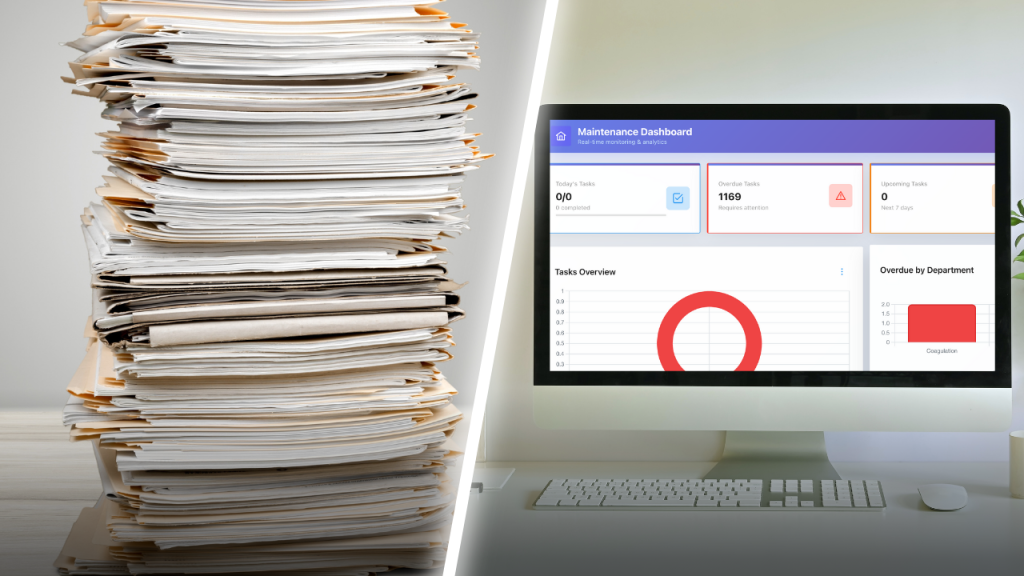
Stack of paper lab logs and binders beside a tablet displaying an electronic laboratory log management system in a clinical lab.
Blog, Electronic Log

Why Paper Logs And Spreadsheets Are Slowing Down Your Laboratory Operations

In many clinical laboratories, paper logs, binders, and scattered spreadsheets are still the backbone of daily operations. From maintenance logs and temperature monitoring to QC documentation and shift reports, labs rely on manual systems that feel “normal” because they’ve always been there. But what feels routine is often the hidden source of inefficiency, compliance risk, and operational stress. Let’s look at what’s really happening inside labs every day. When a Task Is Missed: The Domino Effect When a required task isn’t completed, the real work begins. First, someone has to discover it, often days late,r during a weekly or monthly review. Then comes the investigation: Supervisors start chasing technologists across shifts. Emails are sent. Conversations happen. If the task was critical, preventive maintenance, temperature monitoring, or QC verification, now a variance report must be initiated. What started as a missed check turns into: And in some cases, real risk to patient safety and quality operations. Manual systems don’t prevent missed tasks. They only help you discover them later. The Accountability Problem In laboratories, accountability becomes blurry. Paper logs and spreadsheets: Supervisors spend hours reviewing binders, signing off logs, and manually ensuring nothing was missed. In already short-staffed labs, this repetitive manual oversight consumes valuable time that could be spent on Quality improvement initiatives, Staff training, Operational optimization, and Process improvement. Instead, leadership time is spent chasing documentation. Electronic logs create time-stamped, attributable entries with audit trails and electronic sign-offs, eliminating the need to manually track down responsibility. Accountability becomes built into the workflow, not dependent on memory or follow-ups. Managing Scattered Logs Across Departments Most labs don’t have one log. They have dozens. And they’re often scattered: Managing and monitoring these records becomes a full-time effort. Lab Symplified Electronic Log centralizes equipment records, task management, operational records, quality records, digital shift reporting, and compliance documentation into one unified platform. Instead of flipping through binders, supervisors can: What once required hours can now take minutes. From Reactive to Controlled Execution The biggest difference between paper logs and electronic logs isn’t just digital storage. It’s control.Electronic logs: Instead of hoping nothing was missed, labs gain real-time oversight. Instead of chasing accountability, it’s built in. Instead of discovering compliance gaps weeks later, they’re prevented in real time. The Bottom Line Paper logs may feel simple. But beneath that simplicity lies hidden inefficiency, risk, and wasted time. Electronic log management isn’t just about going digital. It’s about building a laboratory system where accountability is clear, tasks are never missed, and audits are no longer stressful events. For labs ready to replace binders and spreadsheets with structured, audit-ready records, the future isn’t complicated. It’s simply organized.

Blog

Artificial Intelligence in the Clinical Laboratory

Darryl Elzie, PsyD, MHA, MLS (ASCP), CQA (ASQ)Amari Henderson, MBA, MLS (ASCP) Current Applications of Artificial Intelligence in the Clinical Laboratory Artificial intelligence (AI) has transitioned from an experimental concept to an operational reality in the clinical laboratory. Unlike traditional rule-based automation, AI systems utilize machine learning techniques to analyze data gathered from historical records, identifying patterns, detecting anomalies, and supporting clinical and operational decision-making (Dodig, 2025; Yahya, 2025). The primary goal of laboratory AI applications is to function as decision-support tools, augmenting professional judgment. At-a-Glance: Where AI Fits in the Clinical Laboratory Workflow Phase AI/ML Use Cases Data Inputs Operational Outcomes Pre-analytical Order checks, specimen routing, TAT prediction Orders, timestamps,logistics Reduced errors,improved TAT Analytical QC anomaly detection, drift detection, image analysis QC data, analyzer flags, images Earlier failure detection, increased throughput Post-analytical Autoverificationsupport, delta checks Results, prior values Consistent result release, proper notification Operations Workload forecasting,inventory optimization Volume and staffing data Improved throughput,waste reduction In the pre-analytical phase, AI tools are used to flag duplicate or inappropriate orders (an area of challenge for some medical providers), predict specimen transport delays, and optimize collection workflows. These systems are designed to reduce redraws and delays; however, they remain dependent on standardized front-end processes and human beings. AI cannot compensate for poor specimen identification or inconsistent acceptance criteria. Analytical applications represent one of the fastest-growing areas of AI adoption, especially in quality control. Machine learning models analyze multivariate QC data to identify subtle analyzer drift or reagent shifts that may precede traditional QC rule violations. In hematology, microbiology, and pathology, AI-driven image analysis supports cell classification, culture plate reading, and slide triage (Hanna et al., 2025; Sabelli, 2023). Analytical applications represent one of the fastest-growing areas of AI adoption, especially in quality control. Machine learning models analyze multivariate QC data to identify subtle analyzer drift or reagent shifts that may precede traditional QC rule violations. In hematology, microbiology, and pathology, AI-driven image analysis supports cell classification, culture plate reading, and slide triage (Hanna et al., 2025; Sabelli, 2023). Post-analytical AI focuses on consistency and safety. Enhanced delta-checking models incorporate patient-specific baselines, while probabilistic autoverification tools assist in prioritizing results requiring human review. These systems remain bounded by laboratory policy and regulatory expectations for oversight (FDA, 2025). Governance, Risk, and the Human Side of AI Adoption Despite measurable benefits, AI adoption introduces new categories of risk. Machine learning models reflect the data on which they are trained and may perpetuate bias related to patient populations, specimen handling practices, or historical testing patterns (NIST, 2023). Models are susceptible to cultural and systemic biases. Performance may degrade over time due to workflow changes or shifts in patient demographics, necessitating ongoing monitoring and reevaluation. Operational tradeoffs must also be acknowledged. AI systems require integration with laboratory information systems, additional validation effort, and formal change control. While AI may reduce manual review, it often redistributes workload toward exception management, monitoring, anddocumentation rather than eliminating labor entirely. It is incumbent on organizations to have adequately trained staff in problem-solving and root cause analysis. Equally important are the psychological impacts on laboratory professionals. Established change theories, such as Lewin’s Change Model and Kotter’s Eight-Step Process, demonstrate that uncertainty and perceived loss of control are primary drivers of resistance. Laboratory staff may fear deskilling (a demonstrable risk in pathology), increased surveillance, or erosion of professional autonomy if AI is poorly introduced. Prior scholarship on reshaping organizational culture in pathology emphasizes that sustainable change is rooted in trust, psychological safety, and alignment between stated values and operational behavior (Elzie, 2025). The adoption of artificial intelligence follows these same principles. When laboratory professionals understand how decisions are generated, retain authority to override AI outputs, and observe leadership modeling responsible and ethical use, technology functions as an enabler of professional practice rather than a perceived threat. Successful laboratories frame AI as a tool automating low-value, repetitive tasks and enhancing professional judgment. Transparent communication, structured training, and visible leadership engagement help normalize AI as part of continuous improvement rather than disruptive replacement. Ultimately, AI should be governed like any other critical laboratory process: with a clearly defined intended use, risk assessment, validation, change control, and ongoing performance monitoring. When aligned with a strong organizational culture, AI can enhance both operational resilience and professional satisfaction. References Alhamzi Nasser Yahya. Artificial 1Intelligence (AI) Applications in Clinical Laboratories: A Narrative Review. Biomed J Sci & Tech Res 62(5)-2025. BJSTR. MS.ID.009813. Dodig, S. (2025). Are we ready to integrate advanced artificial intelligence models into clinical laboratories? Biochemia Medica, 35(1), 010501. Elzie, D. (2025). Reshaping organizational culture in pathology. Clinics in Laboratory Medicine, 45(3), 383–396. https://pubmed.ncbi.nlm.nih.gov/40818874/ Food and Drug Administration. (2025). Artificial intelligence in software as a medical device (SaMD). U.S. Food and Drug Administration. Hanna, M. G., et al. (2025). Future of artificial intelligence—Machine learning trends in pathology and medicine. Modern Pathology. National Institute of Standards and Technology. (2023). AI risk management framework (AI RMF 1.0). National Institute of Standards and Technology. Sabelli, Chiara. (2023). An AI system helps microbiologists identify bacteria. Nature Italy. 10.1038/d43978-023-00167-9.

Blog, Laboratory General

Always Audit-Ready: Why Digital Maintenance Logs Are a Must for Modern Labs

Understanding the Context Behind the Divide In many clinical and research laboratories, essential routines such as maintenance logs, equipment calibration records, temperature logs, daily operational checklists, quality control, and training sign-offs still live in paper binders or scattered spreadsheets. It may feel manageable, but the hidden cost of these “home-grown” systems grows daily. Whether you’re a bench technologist, supervisor, manager, or lab director, you’ve likely faced the same challenges — forgotten tasks, incomplete documentation, illegible records, and the scramble to find reports before an audit. The Real Cost of Staying Manual When laboratories rely on paper or Excel instead of a dedicated digital maintenance log platform, inefficiencies multiply. 1. Missed or delayed tasks Technologists juggle multiple responsibilities. When reminders rely on memory, things get missed. Managers often discover overdue work too late, forcing last-minute fixes and compliance stress. 2. No data validation or accuracy Paper systems can’t confirm if data was entered correctly or on time. Errors often surface during review, leading to corrective actions, deviation reports, and wasted staff hours correcting preventable mistakes. 3. Disorganization and wasted time (1981–1996)Logs stored in different folders or binders make it impossible to see the full picture. Supervisors spend hours flipping through pages or spreadsheets instead of focusing on quality oversight. 4. Lack of visibility and accountabilityWithout a centralized laboratory dashboard, leaders can’t instantly see overdue tasks, incomplete logs, or recurring quality trends. The result is reactive management instead of proactive control. 5. Compliance gaps Handwritten or scattered records can be misplaced, faded, or incomplete. During inspections, missing records or incomplete documentation can quickly trigger audit findings. 6.Operational inefficiencyFragmented systems cause duplicate data entry, manual reconciliation, and poor traceability , slowing down workflows and clouding performance insights. A Unified Platform for Every Task and Every Role Modern labs need more than a digital replica of paper logs. They need a centralized, role-based system to manage all routine tasks,  maintenance, operations, quality, training, and task assignments. That’s exactly what Lab Symplified delivers. Lab Symplified’s  cloud-based digital lab management platform allows your team to: ·  Digitise every checklist and log (routine and preventative maintenance logs, checklist, temperature logs,training sign-offs etc).·  Assign tasks with built-in reminders and escalation so nothing falls off the radar.·  Support electronic sign-off and review workflows with full traceability.·  Upload attachments (calibration reports, service reports, pictures etc) tied to each log entry.·  Instantly generate audit-ready reports.·  Move from fragmented spreadsheets to one secure, role-based platform. Why Electronic Logs Beats “Home-Grown” Systems Paper and spreadsheets are passive. They don’t remind, assign, or validate. A digital maintenance log system does: ·  Automates accountability : Set tasks once; they stay live with alerts and dashboards.·  Standardizes workflows : Every technologist and department follows the same process.·  Provides real-time insight : Managers know exactly what’s complete or overdue.·  Delivers instant audit readiness : One click shows who did what, when, and with what evidence.·  Reduces cost : Fewer audit findings, repeat tests, and wasted hours chasing records. How Lab Symplified Closes the Loop Lab Symplified unifies maintenance logging, task management, and quality oversight in one secure, cloud-based platform built specifically for labs, not generic office software. Whether you’re running a small hospital lab or a multi-site network, Lab Symplified scales with your workflow, assigns by role, and provides real-time oversight. The moment you eliminate paper, you regain control, tasks get done, records are accurate, training is documented, and audits become stress-free. If your lab still relies on binders or spreadsheets, the cost is already adding up.With Lab Symplified, you gain clarity, compliance, and efficiency, all in one electronic maintenance log system.

Blog, Laboratory General

The Silent Divide: How Generational Tensions Are Affecting Laboratory Teams

Understanding the Context Behind the Divide By Amari Henderson, MBA, MLS (ASCP) Generational tensions can be a sensitive but very real issue within clinical laboratories today. These divides and their impact on workplace culture, mentorship, and retention are increasingly worth discussing. Clinical laboratories are facing a workforce crisis, with experienced professionals retiring and younger scientists entering the field with new expectations, communication styles, and learning preferences. Many newer MLS professionals report feeling unwelcome or undervalued by their older colleagues, while senior staff express frustration with changing work attitudes, a perceived lack of resilience, or a dependence on technology. How can laboratories acknowledge these frustrations while fostering an environment that encourages open communication, mutual respect, and adaptability? First, it’s essential to understand that context, culture, and personal experience matter far more than generational assumptions. Generalizing characteristics to large groups can backfire as some individuals feel mischaracterized or pigeonholed when labeled by their generation (Bentley University, 2025). In a lab setting, applying generational labels like “Boomers resist change” or “Gen Z doesn’t want to work” can hinder collaboration or silence valid feedback. Encouraging teams to see each other as individuals first, rather than as stereotypes, builds psychological safety and creates space for genuine communication. As Johns Hopkins University (2022) emphasizes, values shift over time. Work ethic, loyalty, communication preferences, and adaptability are shaped not only by when someone was born, but also by their lived experiences, training environments, and evolving workplace norms. Generations in the Laboratory Workforce Today’s clinical laboratories often host a mix of mainly four generations. Each generation is shaped by the era they grew up in and the rapid evolution of technology and work culture (Bentley University, 2025). While it’s helpful to understand broad traits, these are not absolutes, and individuals within each generation vary widely. Baby Boomers (1946–1964)·  Defined by strong work ethic, institutional loyalty, and face-to-face communication·  Often supervisors or senior techs·  May rely on manual processes and established routines, sometimes skeptical of rapid tech adoption Generation X (1965–1980)·  Independent, pragmatic, and adaptable, bridging analog and digital eras·  Serve as natural mediators between older and younger staff·  Value efficiency and autonomy in workflow Millennials (1981–1996)·  Purpose-driven, tech-comfortable, and collaboration-focused·  Value flexibility and feedback·  Often advocate for digital transformation and innovation in processes·  Appreciate clear communication and mentorship Generation Z (1997–2009)·  Digital natives who expect fast access to data and transparency·  Value inclusivity and work-life balance·  Quickly adapt to new lab software and automation·  Prefer streamlined workflows and visual dashboards Recognizing these characteristics helps teams understand tendencies, rather than defining individuals. A healthy workplace acknowledges diversity within generations and encourages cross-generational curiosity rather than criticism. Where the Disconnect Begins Generational tension in the lab often stems from differing approaches to learning, feedback, and technology: ·  Training and Mentorship: Senior staff may feel new hires lack patience or initiative, while newer MLS professionals may feel dismissed or micromanaged.·  Technology Adoption: Statements like “we’ve always done it this way” frustrate younger professionals accustomed to automation and real-time transparency.·  Work Ethic Perception: Older professionals may associate dedication with long hours and endurance; younger staff may associate it with innovation, precision, and efficiency. However, these are not signs of incompatibility; they’re opportunities for balance. Experience provides wisdom and context. Innovation brings efficiency and adaptability. The Hidden Cost of Division Unchecked generational division doesn’t just affect morale; it impacts retention, productivity, and compliance. Newer staff may leave when they feel undervalued or unsupported. Senior staff may experience burnout when they feel their experience isn’t respected. Training gaps widen, communication falters, and collaboration gives way to frustration. According to Bentley University (2025), stereotyping generational traits can demotivate employees, especially when individuals feel boxed in or misunderstood. This type of disengagement can result in laboratories losing valuable institutional knowledge and hindering progress toward digital transformation. Bridging the Gap: From Gatekeeping to Mentorship To strengthen laboratory culture, leadership must intentionally bridge the generational divide through communication and shared learning. Strategies to Foster Collaboration: · Structured Mentorship Programs: Pair experienced professionals with new hires to promote mutual learning rather than one-sided instruction.· Reverse Mentorship: Encourage younger staff to share technology-driven efficiencies while learning institutional best practices.· Promote Psychological Safety: Create an environment where every technologist, whether new or seasoned, can ask questions without judgment.· Shared Visibility Through Digital Tools: Platforms like Lab Symplified provide centralized, traceable maintenance logs and records, helping teams work from the same transparent source of truth. As Bentley University (2025) notes, when organizations intentionally leverage generational diversity, it becomes a strategic advantage, combining depth of experience with a fresh perspective. From Division to Legacy Generational diversity in the clinical laboratory is not a weakness; it is a strength. It reflects the field’s evolution. Experienced technologists protect legacy, accuracy, and quality. Newer professionals bring innovation, adaptability, and a forward-thinking approach. When teams replace gatekeeping with guidance and assumptions with curiosity, they build a culture that values both tradition and transformation. The future of laboratory medicine depends not on one generation, but on all of them, working together to advance patient care and uphold the integrity of the profession. References Bentley University. (2025, May 15). Today’s unprecedented six-generation workforce. Retrieved from https://www.bentley.edu/magazine/six-generation-workforce Johns Hopkins University. (2022, November 17). The changing generational values. Imagine Center for Integrative Learning and Life Design. Retrieved from https://imagine.jhu.edu/blog/2022/11/17/the-changing-generational-values/

Laboratory General

How to Become a Medical Laboratory Scientist

Medical Laboratory Scientists (MLS), also known as Clinical Laboratory Scientists, are essential healthcare team members. They perform complex laboratory testing that aids in diagnosing diseases, monitoring treatment, and promoting overall patient health. From hematology to microbiology and blood banking, MLS professionals work behind the scenes but significantly impact patient care. If you’re interested in this highly respected, science-based career, this piece will cover how to get started and practical advice to help you succeed beyond the basics. Meet the Educational Requirements To become a Medical Laboratory Scientist, you must first: A bachelor’s degree program typically includes classroom instruction and hands-on clinical training. Choosing a NAACLS–accredited program is critical. It ensures your education meets the standards required for national certification eligibility. The coursework will cover: Participate in a Clinical Practicum In your final year of study, you’ll complete clinical rotations in lab environments, typically hospitals or reference labs. This supervised experience is where you’ll apply classroom knowledge and begin developing your technical and analytical skills. It is important to take initiative during clinicals. Ask to observe uncommon tests or troubleshoot instruments. The more exposure you get in the field early on, the more confident you’ll be as a new graduate. Get Certified After graduation, certification is the next essential step in the journey to become an MLS. Certification demonstrates your competency to employers and may be required by state licensure boards. The most recognized certifying bodies include: Each organization offers a national exam that assesses your knowledge across all core lab disciplines. Most new graduates take the ASCP Board of Certification (BOC) exam. It is crucial not to delay studying for and taking an exam. Schedule it within a few months of graduation while the information remains fresh. Use official study guides, practice questions, and mock exams from your program or professional organizations. Build a Strong Foundation for the Field Success as an MLS begins during your education. It is essential to use the following strategies when learning information for the field. Focus on understanding, not memorizing. Learn the “why” behind procedures. This builds stronger troubleshooting skills. Use repetition, mnemonics, and visual aids. Try to form a study group to reinforce concepts and talk through difficult material. Create condensed “cheat sheets” or flashcards to summarize key reference ranges, normal values, and disease associations. Many successful MLS students recommend keeping a small reference binder for quick reviews of staining techniques, equations (like anion gap or absolute neutrophil count), and lab values. Tips You Won’t Find in Most Guides Becoming a Medical Laboratory Scientist is a rewarding journey that combines science, problem-solving, and patient impact. With a solid academic foundation, clinical experience, national certification, and a few extra strategies, you will be well-equipped for a successful and meaningful career. Sources: American Medical Technologists. (n.d.). How to become a medical laboratory scientist. Retrieved from https://americanmedtech.org/blog/blog-post/how-to-become-a-medical-laboratory-scientist American Society for Clinical Laboratory Science. (n.d.). How do I become a laboratory professional? Retrieved from https://ascls.org/how-do-i-become-a-laboratory-professional/#1617055895280-c8f09955-5925 American Society for Clinical Pathology. (n.d.). Get credentialed. Retrieved from https://www.ascp.org/content/board-of-certification/get-credentialed Bureau of Labor Statistics. (2024). Clinical laboratory technologists and technicians. U.S. Department of Labor. Retrieved from https://www.bls.gov/ooh/healthcare/clinical-laboratory-technologists-and-technicians.htm University of Cincinnati Online. (2023, July 12). How to become a medical laboratory scientist. Retrieved from https://online.uc.edu/blog/become-medical-laboratory-scientist/

Laboratory General

Reimagining Lab Work: The Case for Hybrid and Remote Roles

By: Amari Henderson, MBA, MLS The Debate on Remote and Hybrid Lab Roles The question of whether medical laboratory scientist roles can evolve into remote or hybrid positions has sparked intense discussions. A recent poll revealed that 39% of respondents believe remote work is possible, while another 39% think it’s worth exploring. However, 12% preferred hybrid roles, and 9% were adamant that lab work needs to remain on-site. The comments from professionals highlight both practical challenges and potential opportunities in transitioning lab jobs to a hybrid model. The Case for Hybrid and Remote Lab Roles Certain aspects of laboratory work undeniably require a physical presence—handling specimens, maintaining instruments, and troubleshooting unexpected results. However, many professionals argue that ancillary lab roles are already remote or have the potential to be. Some key areas include: Point-of-Care (POC) Testing and Hybrid Possibilities Point-of-Care (POC) testing is one area where hybrid roles are already being implemented. POC coordinators and specialists often travel between facilities to ensure compliance, train staff, and troubleshoot issues, but much of their work—such as data review, policy writing, and quality assurance—can be done remotely. As POC technology advances, there is increasing potential for hybrid roles where professionals oversee multiple locations from a centralized remote setting. Addressing the Root Cause: Why the Desire for Remote Work? The push for remote work in laboratory professions may not be solely about convenience but could reflect deeper workplace challenges. Some key reasons include: Far Far Away Let’s be honest—most of us got into the lab field because we wanted to help patients… from a distance. We actively chose the least patient-facing role in healthcare, and now, here we are, trying to figure out how to get even further away. One commenter in the poll put it bluntly: “Why go into a ‘hands-on’ profession if you don’t want to be there? Instruments need maintenance. Specimens and questionable results require us to look at them. Tip them back and forth. Check them for clots. One can’t do that working remotely.” Fair point! On the other hand, another professional noted that hybrid work is already a reality: “There will always be a need for on-site staff to physically do testing, and on-site support to oversee that. But there are tons of ancillary supporting roles that can be done remotely and currently exist out there for those with the patience to find them.” So, maybe we aren’t totally crazy for wanting to swap out our lab coats for pajamas, at least part of the time. Could Alternative Work Schedules Be a Solution? Instead of transitioning fully to remote work, exploring alternative workweek structures might address some of the same concerns. Options such as: These adjustments could improve work-life balance without completely shifting the industry away from its hands-on nature. The Future of Hybrid Lab Roles While not every lab job can become remote, it’s clear that hybrid models are feasible and already in place in some areas. As technology evolves and workforce expectations shift, laboratory professionals and healthcare organizations should continue exploring flexible work arrangements that balance efficiency, employee satisfaction, and patient care needs. By addressing the root causes behind the desire for remote work, the industry may find innovative solutions that benefit everyone. Tell us what you think in the comment section.

Retention
Laboratory General

Staff Retention Techniques for Lab Leaders: Insights from the Frontlines

Staff retention in the medical laboratory field is more critical than ever, as high turnover rates continue to disrupt workflow, decrease morale, and impact patient care. To gain firsthand insights into the challenges faced by lab professionals and what would encourage them to remain in the field, Lab Symplified surveyed members of a Medical Laboratory Scientist Facebook group with over 50,000 members. There were over 130 responses. Their candid responses offer a wealth of actionable strategies that lab leaders can implement to create supportive, efficient, and rewarding work environments. Key Challenges Faced by Lab Professionals The responses revealed several common stressors that contribute to dissatisfaction and burnout: Staffing Shortages: Inadequate Pay and Benefits: Poor Work-Life Balance: Lack of Training and Career Development: Toxic Work Environments: Lack of Recognition and Respect: Strategies for Retaining Lab Professionals Lab leaders can address these challenges by implementing practical solutions that enhance employee satisfaction and retention: 1. Improve Staffing Levels 2. Offer Competitive Compensation and Benefits 3. Enhance Work-Life Balance 4. Invest in Training and Career Development 5. Foster a Positive Workplace Culture 6. Advocate for the Profession Real Impact: Quotes from Lab Professionals Several respondents shared examples of successful retention strategies: Retaining skilled laboratory professionals requires a multilayered approach that addresses staffing, compensation, training, culture, and recognition. Lab Symplified sought to hear concerns directly from lab professionals. By listening to employees’ feedback and implementing thoughtful changes, lab leaders can create an environment where professionals feel valued and supported—ensuring the long-term success of both the team and the organization.

Team
Lab Software Implementation, Laboratory General

From Lab Tech to Director: How Lab Symplified Benefits Your Entire Team

Labs are constantly seeking ways to optimize operations and maximize efficiency. While individual tools can offer isolated benefits, the true power lies in adopting solutions that unify your team and drive collective success. Think of your lab as an ecosystem where every member plays a vital role. From your staff doing hard work at the bench to the lab managers and directors ensuring smooth operations, everyone drives your organization towards a shared goal.  Lab Symplified was designed with this holistic approach in mind. By simplifying tasks, streamlining workflows, and providing access to critical information, Lab Symplified helps to break down silos and unite your team towards a common purpose. This article explores how Lab Symplified’s diverse features cater to the unique needs of each lab role. Inventory Management For Labs Quality Management System Module for Labs Proficiency Tests Tracking For Labs Digital Shift Report For Labs Digital Maintenance Logs for Labs (Coming Soon…) In summary, Lab Symplified is a unified solution that empowers labs to achieve operational excellence. Lab Symplified unlocks the true potential of your lab and its team by fostering collaboration, streamlining workflows, and providing actionable insights.

Scroll to Top